Industrial piping systems rely on components that provide strength, flexibility, safety, and durability in areas where extreme temperatures, high pressures, vibration and movement are a part of daily operations. Of the myriad of components incorporated into engineering and infrastructure, metal hoses represent some of the most reliable options for effective fluid, gas and steam transfer.
Industrial metal hoses are important for leak prevention, vibration management, and the protection of piping assets, whether in an oil refinery, power plant, chemical processing, HVAC, or marine application. With the growth of advanced industries that need durable flexible piping the reliance and importance of flexible metal hoses will increase.
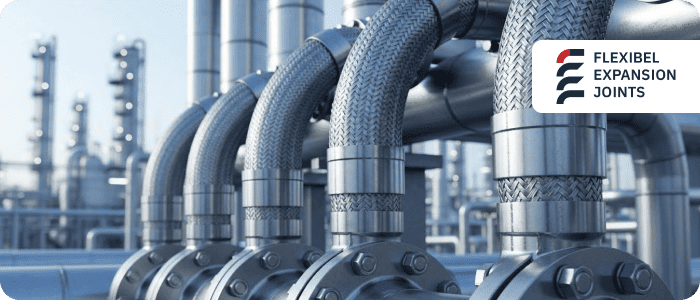
A metal hose, or metal hose pipe, or metallic hose is a flexible, durable, and capable method for handling pressure in transferring liquids or gases in an industrial piping system. A metal hose is customarily constructed of a flexible corrugated body, usually created from stainless-steel, and consists of metal hose fittings and braiding to secure and protect the assembly.
An engineer would use a metal hose when traditional rigid piping materials cannot accept values for spatial vibrations, movements, and thermal expansion. Due to the flexibility of metal hoses, they provide the optimal piping arrangement alternatives where precise alignment is not acceptable.
See also: Your Guide to Metal Expansion Joints: Design, Uses, and Advantages
Metal hoses are available in a range of designs based on type of application, flexibility, thickness, and exposure to the surrounding environment. The most common types include:
These are the most common types of flexible metal hose types. They are designed with corrugations to both allow flexibility and bending without sacrificing pressure performance.
Engineered with multiple protective layers, composite hoses deliver exceptional chemical resistance, flexibility, and operational safety. They are widely used across petrochemical plants, marine loading operations, terminals, and industrial facilities for secure transfer of hazardous and corrosive fluids under tough working conditions.
Interlocking hoses offer strong, flexible, and heat-resistant performance for handling exhaust, fumes, and abrasive air flows. Built with tightly interlocked metal strips, they withstand vibration, pressure, and tough working conditions, making them a reliable choice for factories, foundries, workshops, and ventilation systems.
Many industries nowadays require flexible metallic hose pipe designs that are created to specification, as there are unique lengths, diameters, wall thicknesses, and materials. In the Middle-East, specifically the UAE, there has been increasing demand for hoses that are created to performance specification and based on the application in question.
See also: What Are Rubber Expansion Joints? Types, Applications, and Benefits
Metal hoses are vital in today's industrial piping systems design, providing advantages which cannot be accomplished using traditional rigid pipes. They:
They can also be used as flexible connectors for piping, which can minimize fatigue and risks of equipment damage due to thermal expansion or mechanical movement.
Flexibel Expansion Joints is one such trusted name in engineered hose solutions across the UAE and beyond. Their experience with industrial metal hoses, from manufacture to supply, means your systems will run readily, safely, and efficiently in demanding environments.
Metal hoses are used across numerous sectors, including:
Anywhere there is movement, pressure, or extreme temperature, metal hoses in industrial piping systems are relied upon to maintain operational integrity.
Using metal hoses provides advantages that enhance reliability and lifecycle cost efficiency:
These benefits make them a superior alternative to many conventional hose designs.
See also: Maximizing Pipeline Efficiency: Exploring Different Types of Metal Expansion Joints
Rubber and PTFE hoses have their advantages, but metal hoses have unparalleled strength and safety in extreme industrial conditions.
While rubber hoses are flexible, they can’t handle extreme heat or aggressive chemicals.
PTFE hoses have excellent chemical resistance but are not always appropriate for high movement or structural vibration.
Metal hoses provide strength, flexibility, and thermal and pressure tolerance under high pressure.
This combination is what makes flexible connections often the best solution for piping construction projects.
Engineers should evaluate:
Working with an expert metallic hose manufacturer or a reliable metallic hose supplier ensures the design matches the system requirements.

Metal hoses are an essential component of modern piping systems, where safety, flexibility, reliability, and longevity are desired in many industries. Their design to operate in extreme environments makes them a key design feature in even the most unusual situations, particularly in the industrial sector of the Middle East and Europe.
Flexibel Expansion Joints, as a highly notable manufacturer and supplier of the region, continues to provide additional support to industry, however, what is most important to us is delivering high quality engineered hose solutions that can enhance performance and mitigate risk on your job.