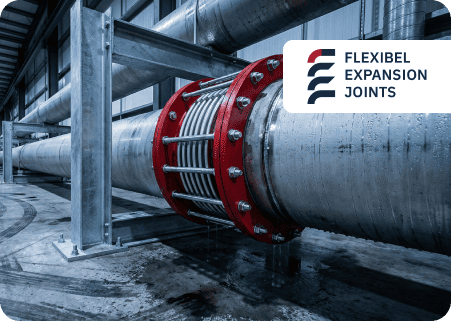
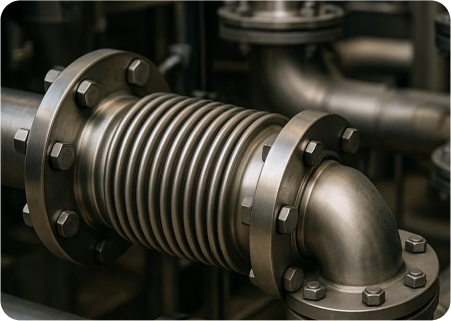
ADIPEC 2026 is organised in Abu Dhabi from 2 to 5 November 2026. The event will be about energy security, new investment, and keeping plants running. Here's something that rarely gets stage time. Every pipe in a plant moves. It gets hot, it cools down, pumps shake it, and pressure keeps changing. If the piping can't give a little, the welds and flanges take the hit.
The way a piping system moves determines which expansion joint configuration it needs. An axial expansion joint, angular expansion joint, and lateral expansion joint each accommodate movement in a different direction, even though their overall purpose is similar.
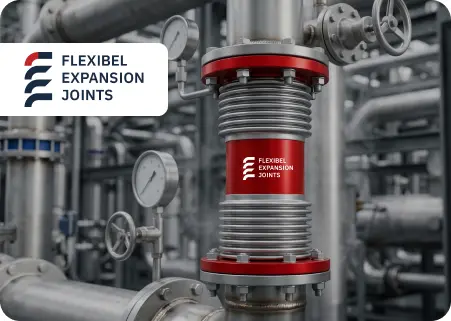
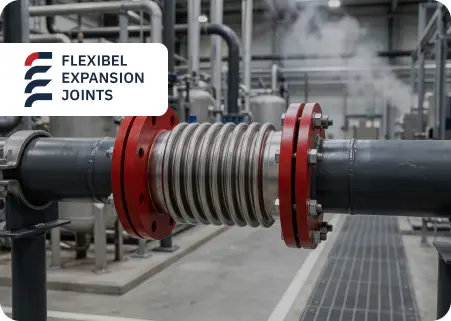
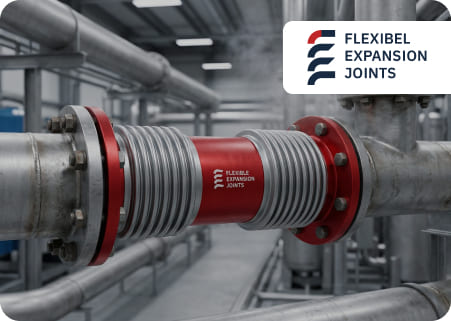
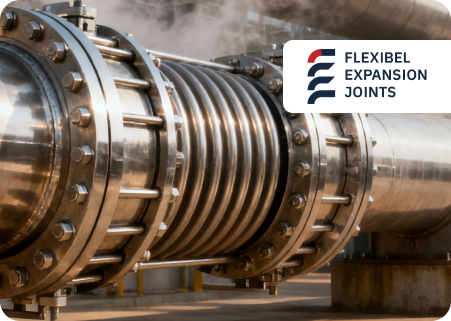
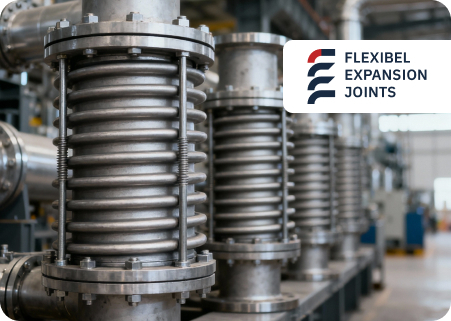
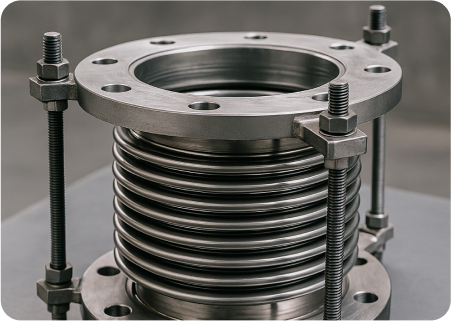
In process piping systems, where variables include temperature and pressure fluctuations, the effects of vibrations and movements can apply stresses to the system components if movement isn't controlled properly. Knowing the types of metal expansion joints available will make choosing a system type for particular movement and working conditions easier. Metallic expansion joints are composed of bellows for controlled movement that maintain pressure integrity.
Choosing the correct industrial metal hose isn't as simple as specifying pipe size. Pressure, temperature, media, flow, movement, bend radius, and end fittings all affect hose capacity. An incorrectly applied hose can cause leakage, pressure loss, accelerated fatigue, premature failure, and unnecessary replacement.
Vehicles are subject to inherent vibrations, movement, heat, moisture, road debris, and dynamic operating conditions. Expansion joints for automobile applications are used in combination to absorb movement; in other words, to absorb road and component movement away from the part that needs protection.
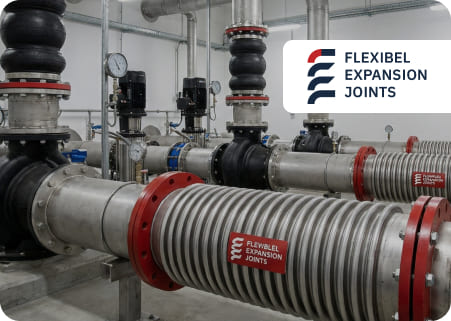
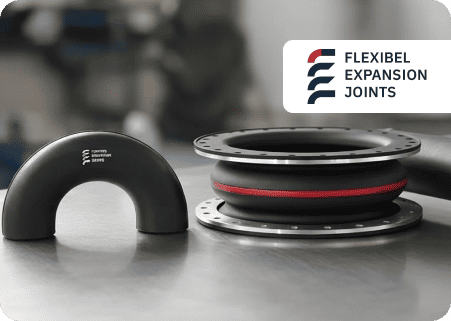
A twin sphere rubber expansion joint is installed within a pipeline where increased flexibility and the need to support the absorption and isolation of vibrations and mechanical forces are required; twin balls will also offer a higher degree of available linear compensation compared to a single-ball design.
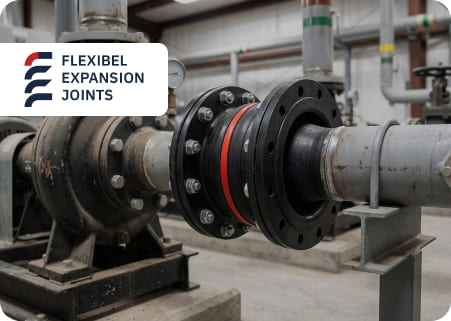
A single sphere rubber expansion joint is essentially a specially designed, flexible joint that fits into a length of pipe to allow for the absorption of movement and the lessening of vibration while, simultaneously, protecting machinery from damaging mechanical forces. They’re constructed using a body that’s spherical and typically made of elastomer so that they allow free movement between sections of the piping while holding firm in their designated locations. In any industrial scenario, equipment isn’t static, and, among other pressures, vibrations from pumps, expansions and contractions from shifting ambient conditions, and added stresses from attached machinery add mobility to pipelines.
A pipeline in the oil and gas industry transports oil, gas, and other substances under enormous heat and pressure-for weeks or months without pause. But it is not fixed in place and unyielding; the high heat expands the pipe as it moves, and pumps and compressors shake it constantly. This movement eventually creates stress, builds the pressure up enough, and gradually a weld breaks, a flange goes bad, or a whole section of pipe might simply blow out.
In a busy plant, the parts that cause the most trouble are often the ones
nobody notices. An expansion joint is a good example. It
sits in the pipes and takes in heat, pressure, and shaking all day, every
day. Then one day it cracks, a pipe starts leaking, and the whole plant
has to stop.
Industrial piping is constantly in motion. Heat causes pipes to expand,
cooling makes them contract, pressure places stress on the system, pumps
generate continuous vibration, and even minor structural settlement can
shift pipelines over time. None of these forces is unusual on its own. The
real problem begins when that movement has nowhere to go.
Within the tough industrial environment, the expansion joint is a small
component with a big responsibility. It helps absorb a high level of
motion, vibration, and strain from a piping system and takes on loads that
would damage rigid pipes. If correctly specified, it runs smoothly for
years to come. When wrongly specified, it can lead to leaks, damage of
equipment, and unplanned shutdowns.
Every piping system has a vulnerable point, and that point isn’t the pipe. It’s the part that needs to absorb motion, vibrations, and forces, but still hold. Once you choose the wrong component, unplanned downtime, broken flanges, and rising maintenance costs will follow. Choose right, and the system keeps operating.
Between a single-sphere and double-sphere expansion joint, there is a critical decision, so in this blog, it is put simply for you to decide which one to choose.
A modern cement plant operates under some of the harshest industrial conditions imaginable. Temperatures can exceed several hundred degrees Celsius, large volumes of abrasive dust move through extensive ducting networks, and critical equipment must perform continuously to maintain production. In such an environment, even a small component failure can trigger costly downtime and operational disruptions.
Temperature fluctuations/changes in industrial piping systems occur frequently. Steam lines will heat up while the system is operating, process pipelines transport hot media long distances, sometimes hundreds of meters, and exhaust systems undergo pct/thermal cycling continuously. In general, it is expected that when a material heats up, the material's owner/creator will experience an increase in the overall size (volume) of the increase due to expansion of the material; the increase in volume will create an increase in total stress (over-stressing) within the piping system if the expansion is not controlled.
Industrial machinery is designed to withstand pressures, temperatures, and
operate in continuous cycles; however, movement can cause problems. Pipes
will expand as they heat up, ductwork will shift from the weight of the
loads it supports, and vibrations will pass through all equipment every
day. Over time, even small amounts of uncontrolled movement can damage
connected systems.
On paper, piping systems always look clean. Straight runs, neat layouts, perfect alignment. But step onto an actual plant floor, and things are very different. Space is getting tighter, temperature is fluctuating more than expected, and there's vibration from equipment that never really stops. That's why piping design is more than just drawing pipe systems; it's actually about considering how those pipe systems will behave once they're in use, especially when components like supports, expansion elements, and even metallic bellows come into play to handle real-world movement
If you walk through any oil refinery, operating plant, power station, or large HVAC, it becomes immediately noticeable how much movement occurs within these facilities: pipes constantly heat up and cool down; there are small movements or shifts of the piping due to temperature fluctuations; and all of the equipment causes some level of vibration throughout the facility.
If you’ve spent any time around industrial piping systems, you know pipes are never fully stable. They increase in size as temperature rises and decrease as temperature falls, and they are subject to continuous vibration from pumps, compressors, and flow variations.
Piping systems for industrial purposes are never truly immobile. Constantly changing temperatures and pressures, along with operational vibrations and the way they were installed, are always influencing how pipes behave in a given system.
In modern piping, movement can’t be avoided. Temperature changes, vibration from rotating, pressure changes, and structural shifts create tension in pipelines.
Modern piping and ducting systems are constantly exposed to temperature, pressure, vibration, and other operating loads, making it impossible for them to remain in one form.
Piping systems play an important role in industries like Gas, Marine, Oil & Gas, HVAC, Power Generation, and Manufacturing, as they are essentially the "backbone" of all those industries.
Today's industrial, commercial, and infrastructure systems have many pipes within their networks and must therefore operate smoothly under the impact of constantly changing pressure, temperature, vibration, and structural movement.
Industrial piping systems rely on components that provide strength, flexibility, safety, and durability in areas where extreme temperatures, high pressures, vibration and movement are a part of daily operations. Of the myriad of components incorporated into engineering and infrastructure, metal hoses represent some of the most reliable options for effective fluid, gas and steam transfer.
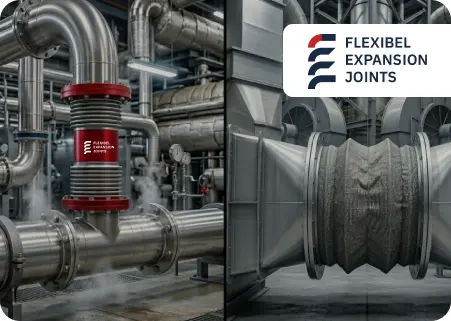
Today's industrial piping and ducting systems constantly experience stressors associated with changing temperatures, mechanical vibration, and some kind of movement associated with operating environments. The material of a piping or ducting system will expand and contract every time the equipment heats and cools. Without a proper way to absorb these movements, systems will begin to crack, leak, misalign, and fail prematurely. This is where the use of fabric expansion joints will make a difference.
Industrial systems, pipelines, and heat exchangers are constantly exposed to temperature, pressure, and stress. Metals will expand when heated and contract when cooled. If sufficient allowances are not included for these types of movements, the result could be leaking pipelines, misalignment, or fatigue cracked pieces. In some cases, they could even fail catastrophically.
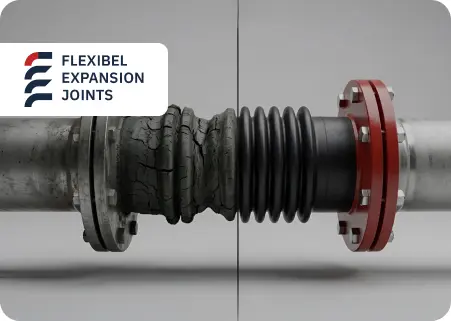
In the modern industrial society, pipelines are subject to constant stress. There are many variables involved such as temperature, changes, vibration and pressure surges that can damage a rigid system. This is where rubber expansion joints are utilized. Rubber expansion joints act as a flexible connector to absorb movement, dampen vibration and protect piping systems in the marine, oil and gas, power, water treatment and chemical processing industries.
Pipelines rarely make the news until trouble hits. A sudden rupture at a power plant or a leak inside a refinery can freeze an entire operation in seconds.
Pipelines keep modern industry alive. Pipelines carry steam, water, oil, chemicals, and gases through refineries, power stations, and processing plants, pretty much anything an industrial system needs to run.
Bellow joint expansions might not look like much, but they do a big job in piping systems. They take in all the shaking, shifting, and expanding that happens when temperatures change, or systems run under pressure. Without them, pipes would wear out a lot faster. They also help cut down on noise and fix minor misalignments.
In the world of modern industry, attention often gravitates toward cutting-edge machinery and advanced automation. However, there’s a critical component operating quietly behind the scenes - metal bellows and expansion joints. That plays a pivotal role in ensuring operational efficiency and longevity.