Industrial systems, pipelines, and heat exchangers are constantly exposed to temperature, pressure, and stress. Metals will expand when heated and contract when cooled. If sufficient allowances are not included for these types of movements, the result could be leaking pipelines, misalignment, or fatigue cracked pieces. In some cases, they could even fail catastrophically.
Metal expansion joints are made to absorb thermal expansion, relieve stress, and isolate vibration. Metal expansion joints will protect against damaging the equipment, reduce maintenance costs, and extend the operational life.
In regions like the UAE, Saudi Arabia, Qatar, Bahrain, Kuwait, Italy, and Spain, where industrial systems are subjected to major swings in temperature and high pressures, it is important to select the correct industrial expansion joints, as it relates to safety and continuity.
Pipeline expansion joints will also reduce vibrations from pumps, compressors, and machinery that may provide instability in the system stimulation. It is important for engineers, managers of plants, and procurement personnel to understand the different types of metal expansion joints in order to ensure optimal performance and longer life in the pipelines.
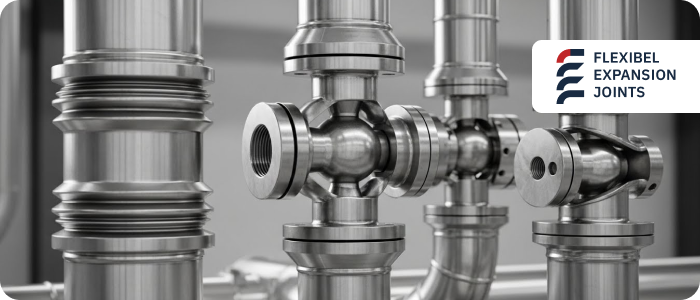
Choosing the correct metal expansion joint will ensure that there is safety, efficiency, and longevity. Each type is engineered for its own movement, and thus its own operational circumstances.
They are compact, less expensive, and made to absorb some axial movement, maximum movement in straight runs, and to a lesser degree lateral and/or angular. Single expansion joints are normally low pressure bellows and little diameter systems with minimal axial movement.
Universal expansion joints consist of two bellows connected by a spool piece. These types of joints allow for engineered lateral and angular movement, while maintaining minimal axial thrust on anchors. Universal expansion joints are often useful for long pipelines and hoses or when anchors are scarce in complex industrial situations.
Hinged joints permit rotation through one plane and restrain movement along the pipe. Hinged Expansion Joints provide stability in systems with limited anchorage or situations where lateral movement needs to be managed.
Gimbal joints allow for rotation through multiple planes via a gimbal arrangement. Gimbal expansion joints are ideal for pipeline arrangements with challenging initial layouts, allowing movement while preventing the transfer of stress or forces into the nearby anchors or connected equipment.
In high-pressure pipelines, axial thrust can be substantial enough to overload anchors. Conventionally, pressure-balanced joints can counterbalance the axial forces and alleviate the loads imposed on anchors. They are useful in tied-piping systems or where the installation of anchors is difficult or costly.
Jacketed bellows incorporate an outer jacket or sleeve to protect the bellows from corrosion, abrasion, and/or high temperature. Jacketed bellows are typically used in chemical plants, high-temperature steam lines, and offshore or marine installations to withstand long duration and harsh conditions.
Specialty bellows, which may have special forms which are toroidal or conical, are designed to serve special operational requirements. Toroidal bellows are designed to address large movements in low-cycle applications, whereas conical bellows are suited for situations with complex movement and where space is limited.
See also: Overlooking Industrial Joints and Bellows: The Hidden Risk to Your Operations and Bottom Line
Selecting the appropriate types of expansion joints is determined by several critical factors.
Selecting the right metal expansion joint is essential for reliable and safe pipeline operations:
See alse: Quality Manufacturer of Bellow Expansion Joint for Modern Industries
Correct installation and maintenance will prolong the lifespan of metal expansion joints and bellows for piping:
The correct use of metal expansion joints can yield a number of advantages:
The long-term value in durability of metal expansion joints will create savings and cost efficiencies when incurred maintenance and employee time for replacement of fabric or rubber joints isn't required.
See also: Your Guide to Metal Expansion Joints: Design, Uses, and Advantages
In comparison to fabric or rubber joints, flexibel metal expansion joints are better suited to pipelines subjected to high pressure, high temperature, or highly corrosive environments.
The advantages include:
Ability to Custom Design: A custom metal expansion joint manufacturer can customize the joint to specific requirements for your system.
They will work exceptionally well for pipelines in the UAE, Saudi Arabia, Qatar, Bahrain, Kuwait, Italy and Spain.
Flexibel Expansion Joints manufactures durable metal expansion joints and bellows for piping throughout the UAE, Saudi Arabia, Qatar, Bahrain, Kuwait, Italy, and Spain. We are known for manufacturing custom metal expansion joints for specific project needs.
Here are some of the benefits:
Our expansion joints and bellows are trusted by industries that can’t afford to take chances including:

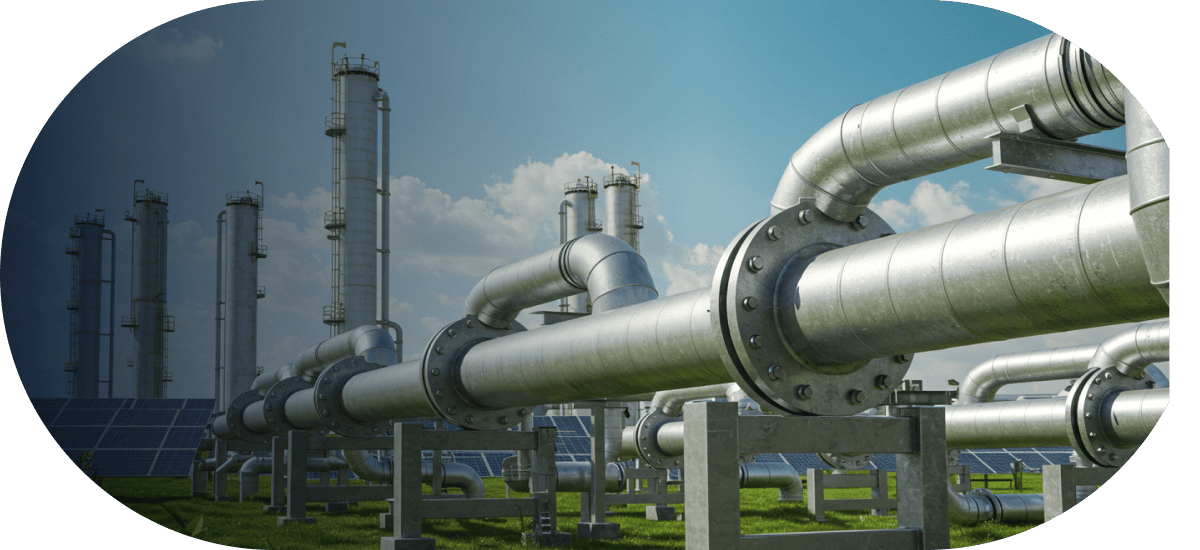
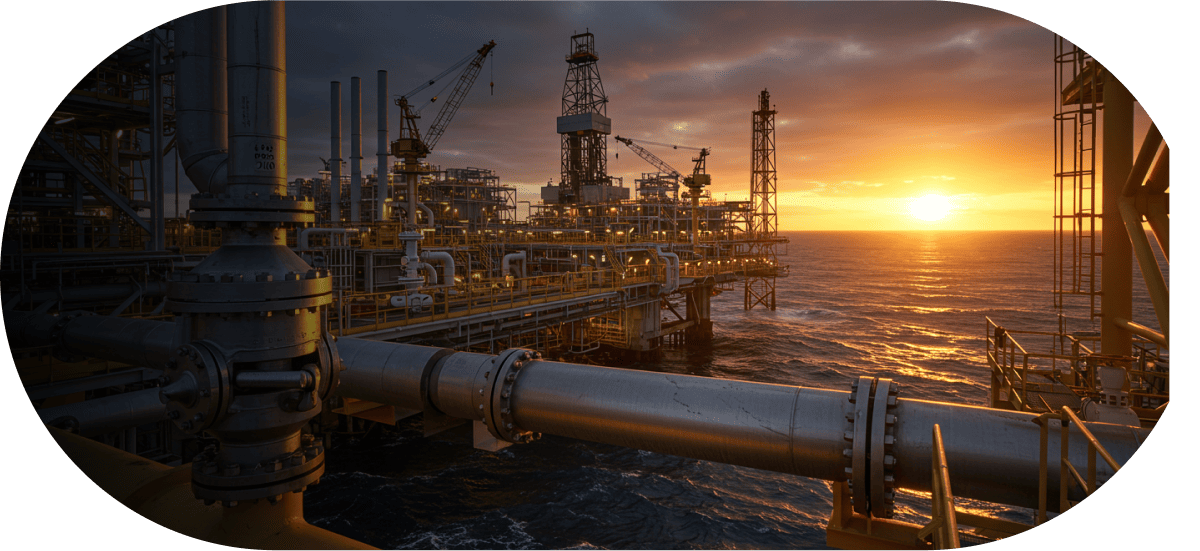

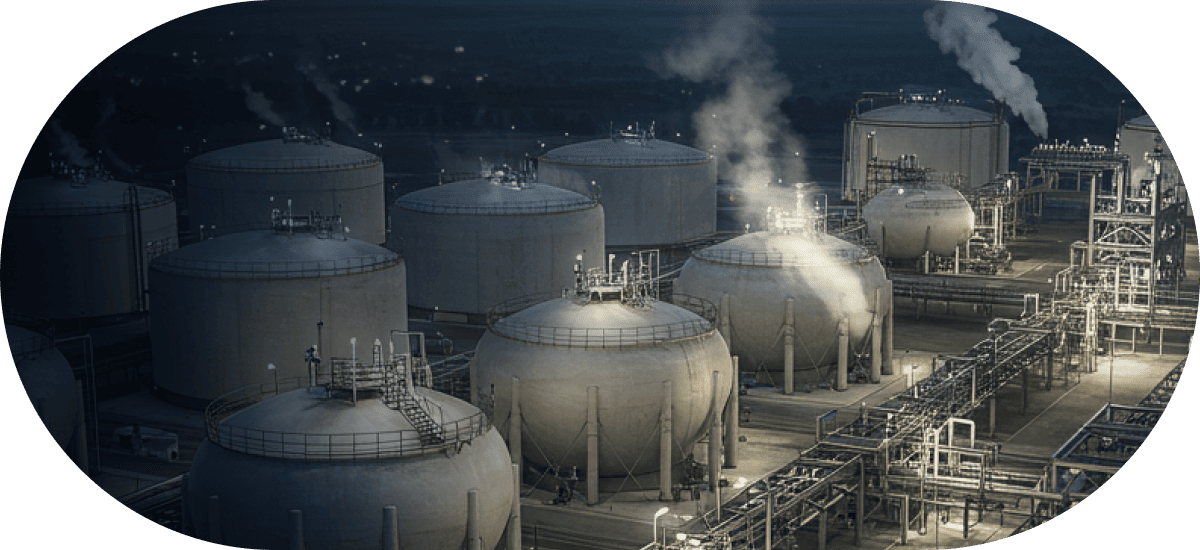

Familiarity with the various types of metal expansion joints and choosing the proper expansion joint design is essential for safety and efficiency of any pipeline. Properly designed expansion joints reduce stress, prevent leaks and improve operational reliability.
Working with a proven supplier who will manufacture custom Metal Expansion Joints, will ensure you receive your order on time, meet codes and standards, and have a long lasting pipe joint.
Flexibel Expansion Joints has been a leader in quality and expertise with metal expansion joints across industries in the UAE, Saudi Arabia, Qatar, Bahrain, Kuwait, Italy, and Spain.
Metal expansion joints are intended for high pressure and thermal applications. They are fatigue resistant and suited for piping in industrial service. Fabric expansion joints are intended for low-pressure, low-temperature-type applications such as ventilation ducts.
Rubber expansion joints are beneficial for vibration isolation, but again, they are intended for low-pressure piping. They would not operate safely in a high-pressure environment where metal expansion joints could withstand the higher pressure and temperature and would last much longer as well.
The best choices are stainless steel expansion joints or high-grade alloys. Additionally, jacketed or coated designs protect against environments with corrosion in general, which will be ideal in areas with normal to high corrosive elements, such as far regions of the UAE, Qatar and Bahrain.
Standard tests used on expansion joints include hydrostatic testing, a visual inspection, and non-destructive testing (NDT) to confirm that metal expansion joints and bellows for piping can be safely used and performance met established standards for performance.
Although this will vary depending on the type of industry, for normal environments, inspections are to be conducted every 3-12 months. If the system has high temperature, high pressure environments, and/or corrosive environments, an increased frequency of inspection will be necessary to ensure continued safety and optimal life of the joint.