Piping systems for industrial purposes are never truly immobile. Constantly changing temperatures and pressures, along with operational vibrations and the way they were installed, are always influencing how pipes behave in a given system.
When combined with environmental factors (such as in refineries, marine systems and power generation), these factors can create prolonged stress inside an otherwise rigid system. This stress, if not properly managed, leads to fatigue, leaks, cracks and failures resulting in a high cost of down-time for the facility.
To effectively absorb the movement in piping systems while maintaining integrity of the system components, Expansion Joint Systems, also commonly referred to as Expansion Bellows, Flexible Joints or Compensators are engineered devices specifically designed to operate safely within piping and ducting systems, thus allowing for expansion, contraction and movement within those systems without transmitting damaging forces to the equipment or the structural supports of the system.
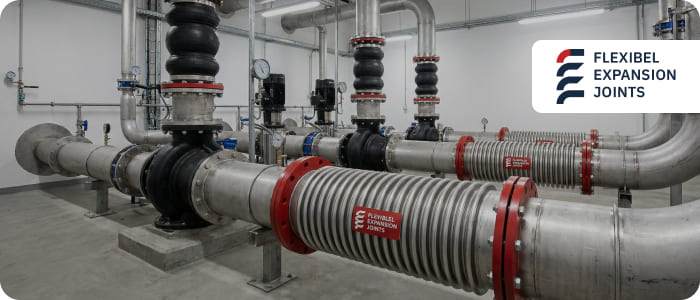
The majority of typical expansion joints are made from a flexible bellows (usually crafted out of stainless steel, rubber or fabric) that is constructed using precision convolutions to create a perfect balance of strength and flexibility. The design of the expansion joint will allow for axial, lateral and angular movement of the expansion joint while still maintaining pressure integrity.
The need for engineered flexibility is greater in high-temperature areas such as the Middle East due to the large amount of thermal cycling caused by temperature changes and environmental differences in the UAE. This creates a tremendous amount of movement in piping systems that increases the rate of wear at seals, welds and flanges.
This is why engineered industrial expansion joints are necessary in industries such as oil & gas, marine, desalination, and heavy manufacturing sectors, where there should be no failure
An Expansion Joint is a flexible mechanical part installed within pipelines or ducts to absorb movement caused by thermal expansion, vibration, pressure deformation, or structuring. Instead of forcing strong pipes to absorb stress, the joint expands and separates that movement.
The core element of most joints is the bellows, a corrugated structure designed to compress and extend while maintaining internal pressure containment. This ability to flex without failing is what makes expansion joints indispensable in modern expansion joints for piping systems.
See Also: Understanding Expansion Joints: Types, Manufacturing, and Benefits
In sunlight, steel pipelines in the UAE can expand hugely during the day and contract at night. This repeated cycle creates wear and tear in welds and pipe supports without movement absorption.
Expansion joints act as delays, allowing movement without transferring stress into the system. They also isolate mechanical vibration generated by pumps, compressors, and turbines, preventing vibration from propagating across entire piping networks.
For engineers designing systems in extreme environments, the property included is compulsory. It is important for long-term reliability.
Expansion joints protect the weak points in piping, seals, welds, and flanges. Small movements can damage sealing surfaces in high-pressure piping.
By absorbing displacement, expansion joints:
This makes them critical in expansion joint for oil and gas pipelines and heavy-duty industrial installations.
Expansion joints function with controlled flexibility. The bellows compress, extend, or bend depending on system movement. Complex geometry is carefully engineered so the bellows can handle internal pressure while remaining flexible enough to absorb.
Read More: Metal Expansion Joints vs. Rubber Expansion Joints
In compressor lines, for example, an expansion joint for compressor vibration control stops vibration from travelling into the tough piping, protecting both equipment and structural quality.
Here are the main types of expansion joints:
1. Metallic Expansion Joints: Metallic Expansion Joints are made from stainless steel bellows and designed for high-pressure and high-temperature applications. These include metal expansion joints used in refineries, steam systems, and offshore pipelines.
They are the best choice for strength, corrosion resistance, and pressure tolerance.
2. Rubber Expansion Joints: Rubber Expansion Joints are elastomer-based joints used for vibration absorption and noise reduction. These joints, including Rubber expansion joints and rubber expansion bellows, are commonly used in HVAC, water treatment, and pump connections.
Many systems requiring flexibility and damping depend on custom rubber flexible joint designs.
3. Fabric Expansion Joints: Fabric Expansion Joints are light solutions used for ducting and exhaust systems. Often used in fuel and gas lines, these fabric joints handle large movements without corrosion and high temperatures.
They are widely used in power plants and air handling systems.
4. Metal Hoses: Flexible metallic hoses and metallic hose assemblies complement expansion joints where high flexibility and vibration isolation are needed. These are frequently installed in turbine and compressor interfaces.
Selecting a material affects durability and performance. Metals like stainless steel provide strength and corrosion resistance, making them the right choice for high-temperature metal expansion joint manufacturer requirements.
Rubber offers flexibility and damping, while other fabrics are selected for light thermal applications. Selecting the correct material is necessary for a custom made expansion joint for industrial applications.
Expansion joints are widely used across heavy industries. Oil and gas facilities rely on heavy-duty expansion joint for refinery pipeline installations to manage extreme thermal cycling.
Marine environments use corrosion-resistant designs. Power plants integrate expansion joints into steam systems. Chemical plants depend on them for flexibility and containment
Selecting the right joint requires checking movement, pressure, temperature, and installation space. Engineers must consider:
Working with a reliable Expansion Joint Manufacturer ensures proper engineering and safety margins.
Without expansion joints, piping systems get damaged quickly. Weld cracking, flange misalignment, and gasket failure are common results. Even minor stress can damage sealing surfaces at high pressure.
This is why expansion joints are considered protective devices rather than optional accessories.
Correct installation is critical. Improperly fitted, unmatched or not anchored bellows can reduce lifespan. Checking bellows regularly allows early detection of bellows wear or corrosion.
Early maintenance greatly improves operational safety and also improves equipment life.
In GCC environments, expansion joints must handle high ambient temperatures, aggressive media, and continuous operation. Selection should factor in regional conditions and application intensity.
Partnering with a premier expansion joint supplier helps get the correct sizing and performance.
Expansion joints must follow recognised industry standards. Flexibel manufactures products aligning with EJMA guidelines and holds approvals from global inspectors such as Bureau Veritas and ClassNK.
These certifications maintain reliability across marine and industrial applications, keeping its position as the best expansion joint company in the UAE.
As a UAE-based manufacturer, Flexibel understands regional operating problems such as extreme heat, tough environments, and demanding industrial standards.
The company specialises in custom expansion joints engineered for performance and durability. Flexibel delivers application-specific solutions built on engineering expertise and global approvals with a strong presence in oil & gas, marine and EPC sectors.
For projects requiring reliability under pressure, partnering with a trusted Expansion Joint Manufacturer makes a huge difference.

Expansion joints are the foundation of modern industrial infrastructure. By absorbing thermal expansion, vibration, and mechanical stress, they protect piping systems from early failure and ensure consistency.
From Metallic Expansion Joints to Fabric Expansion Joints, selecting the right solution depends on operating conditions, industry demands, and engineering precision. With the right expertise and manufacturing standards, expansion joints are the protectors in the global industry.