Temperature fluctuations/changes in industrial piping systems occur frequently. Steam lines will heat up while the system is operating, process pipelines transport hot media long distances, sometimes hundreds of meters, and exhaust systems undergo pct/thermal cycling continuously. In general, it is expected that when a material heats up, the material's owner/creator will experience an increase in the overall size (volume) of the increase due to expansion of the material; the increase in volume will create an increase in total stress (over-stressing) within the piping system if the expansion is not controlled.
Over time, uncontrolled thermal growth can lead to:
This is why expansion joints for piping systems are considered essential in industries where temperature variation is part of normal operation.
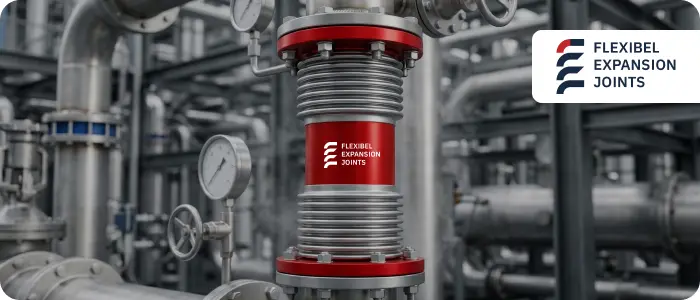
By selecting the right type of expansion joint, it will absorb the necessary amount of movement before it transfers any harmful stress into other connected equipment and pipe structures. The expansion joint will be significantly beneficial to the overall reliability, long-term maintenance costs, and operational safety of the system when used in a high-temperature, industrial environment.
In general, the process of selecting the correct expansion joint is not an easy task. There are many variables to consider when selecting an expansion joint because each piping system has different pressure, temperature, media, and movement needs. An expansion joint that may work perfectly on a steam pipeline may not work at all, or at the very least, not as expected when it is installed in a wild application or in an application utilizing a corrosive medium.
This guide explains the best thermal expansion joints used in industrial piping systems, how they work, and the key factors engineers and buyers should evaluate before selecting a solution.
Thermal expansion occurs when piping materials increase in length due to rising temperature.
As metal heats up, molecular movement increases, causing the pipe to expand gradually. In small systems, the movement may appear minimal. In long industrial pipelines operating at elevated temperatures, however, expansion becomes significant.
For example, a long steam pipeline operating continuously at high temperatures can expand several millimeters or more depending on pipe length and material type.
Without proper movement absorption, that expansion force transfers directly into:
This creates continuous mechanical stress throughout the system.
Industries are continually transitioning to higher temperature processes, and the expansion of piping systems that operate under high pressure is commonplace. As a result of this change, it is important to have properly designed industrial expansion joints in high-temperature piping applications.
Industrial piping systems are not rigid structures in real operating conditions. Even carefully designed systems experience movement during startup, shutdown, and continuous operation.
Expansion joints are installed to absorb that movement safely.
Without them, thermal stress gradually weakens the piping system and surrounding equipment. In many cases, failures do not happen immediately. Damage develops slowly through repeated operating cycles.
A properly selected expansion joint helps:
In high-pressure industrial environments, movement management is not simply about convenience. It becomes a major reliability and safety consideration.
Well-designed piping expansion joint solutions help extend equipment lifespan while reducing maintenance frequency across the entire system.
Learn More: Benefits of Expansion Joints in Industrial Piping Systems
Different systems require different expansion joint designs depending on operating conditions.
Some applications demand high-pressure resistance, while others prioritize flexibility or chemical compatibility.
Below are the most commonly used thermal expansion joints in industrial piping systems.
Metallic expansion joints are among the most widely used solutions for high-temperature and high-pressure industrial piping.
These joints typically use stainless steel bellows designed to absorb axial, lateral, or angular movement while maintaining pressure containment.
Key advantages include:
They are commonly used in:
For demanding industrial environments, metallic bellows remain one of the most reliable expansion joints for piping systems available.
Check out: Metallic Expansion Joints
Fabric expansion joints are mainly used in low-pressure gas and ducting applications rather than pressurized liquid piping systems.
These joints use layered composite fabrics designed to handle movement and vibration efficiently.
Key advantages include:
Fabric joints are commonly used in:
Although not suitable for high-pressure piping, they remain highly effective in thermal movement applications involving gases and air handling systems.
Check out: Fabric Expansion Joint
Expansion joints made from rubber are a flexible connector type that is most often found in piping systems that experience vibration, noise, and moderate thermal movement.
They are used mainly to connect pump systems and rotating equipment to the piping system.
Advantages include:
Rubber joints are often used in:
They are generally not suitable for extremely high-temperature or high-pressure service compared to metallic systems.
Check out: Rubber Expansion Joints
Selecting the best expansion joint involves more than matching temperature capability alone.
Several engineering factors must be evaluated together before making a final decision.
Temperature directly affects:
High-temperature steam systems usually require metallic bellows, while lower-pressure gas systems may use fabric solutions effectively.
Pressure capability is one of the most important selection criteria.
High-pressure pipelines generally require metallic assemblies capable of maintaining structural integrity during operation.
Lower-pressure systems allow greater flexibility in joint design selection.
The operating media influences both material compatibility and joint design.
Examples include:
Chemical exposure often requires PTFE-lined or corrosion-resistant materials.
Expansion joints may need to absorb:
Improper movement calculations are one of the most common causes of expansion joint failure.
Space limitations affect the type of joint that can be installed safely.
Compact piping layouts often favor metallic bellows because they require less installation space compared to larger flexible assemblies.
Industrial piping systems must comply with relevant engineering standards and design codes.
Expansion joint selection should always consider:
Ignoring compliance requirements can lead to premature failures and operational risks.
Both metallic and fabric systems are designed to absorb movement, but they operate very differently.
| Feature | Metallic Expansion Joints | Fabric Expansion Joints |
|---|---|---|
| Pressure Capability | High | Low |
| Temperature Resistance | Very High | High |
| Flexibility | Moderate | Very High |
| Ideal Application | Pipelines | Duct Systems |
| Vibration Isolation | Medium | Excellent |
| Weight | Heavy | Lightweight |
| Mechanical Strength | Strong | Moderate |
Metallic bellows are generally the preferred solution for pressurized industrial piping.
On the other hand, fabric systems tend to work well for large, low-pressure exhaust ducts due to their high degree of flexibility, ability to absorb vibrations, and overall performance.
When making a choice, you will need to have a good understanding of the environment in which each system operates.
Know More: Metallic vs Fabric Expansion Joints: Which is Best for Industrial Applications?
Expansion joint failures are often caused by improper selection or installation rather than manufacturing quality.
Several recurring problems appear across industrial facilities.
Many failures occur because actual system movement exceeds the joint’s design capability.
Thermal growth calculations must consider real operating conditions rather than theoretical assumptions alone.
Expansion joints require proper support and anchoring arrangements.
Poor anchoring can transfer excessive movement into the bellows assembly and shorten service life significantly.
Corrosive media can damage unsuitable materials quickly.
Material compatibility should always be verified before installation.
Continuous vibration from pumps, compressors, and turbines accelerates fatigue damage.
Proper vibration isolation improves joint lifespan considerably.
Improper alignment during installation places additional stress on the expansion joint before operation even begins.
Correct installation practices are critical for long-term reliability.
Proper installation affects performance just as much as design quality.
Several practices help improve long-term reliability.
Piping alignment should be checked carefully before installing the joint.
Expansion joints should not be forced into position during assembly.
Exceeding movement limits shortens service life significantly.
Operating conditions should remain within the joint’s specified movement capability.
Anchors and pipe guides help control thermal movement throughout the system.
Without proper support, movement loads transfer directly into the joint assembly.
Torsional loading can damage bellows structures quickly.
Expansion joints should never be twisted during installation.
Periodic inspection helps identify:
Preventive maintenance improves operational reliability and reduces unexpected shutdowns.
Check out: Expansion Joint Installation Guide for Industrial Systems
Flexibel is a trusted UAE-based manufacturer and supplier of high-quality expansion joints for industrial piping, ducting, and thermal movement applications across the Middle East. With a strong focus on engineering precision, durability, and international quality standards, Flexibel provides reliable expansion joint solutions designed for demanding industries such as oil & gas, power plants, HVAC, petrochemical, and manufacturing facilities.
The company supports industries including:
Services include:
Instead of supplying generic solutions, Flexibel evaluates operating temperature, pressure conditions, movement requirements, and environmental exposure before recommending a design.
That application-focused approach helps improve reliability in demanding industrial environments.

Thermal expansion is a natural occurrence in industrial piping systems. Due to temperature increases and fluctuating operating parameters, pipelines will typically expand and contract with normal operation.
As thermal stress builds up, any movement not adequately controlled could cause progressive damage to pipeline systems; this includes damage to pipelines themselves, pipelines’ supporting structures, and equipment connected to the pipeline system or equipment adjacent to the system.
Selecting the correct type of thermal expansion joints is crucial to assure reliable performance of the overall system over time.
Different systems require different solutions.
The best expansion joints for thermal expansion industrial piping systems are those selected based on actual operating conditions rather than cost or temperature alone.
Temperature, pressure, movement range, media compatibility, installation space, and system design all influence long-term performance.
Facilities that prioritize correct expansion joint selection usually experience:
For industrial projects requiring any engineered guidance and reliable piping expansion joint solutions, working with experienced specialists like Flexibel helps ensure the selected system matches real operating conditions, and even complex ones.